
Garden machinery, including ride-on mowers, electric tillers, robotic lawn cutters and utility yard carts, works in rough outdoor conditions: uneven ground, frequent vibration, fluctuating temperatures and intermittent heavy load bursts. Many buyers only compare price or Ah rating when replacing or sourcing batteries, and end up with weak power, short cycle life and unexpected downtime. Picking a reliable motive battery for garden equipment requires you to look beyond basic labels and match the battery performance to real working scenarios.
The first rule is to confirm your equipment’s power demand and duty cycle. Light residential garden tools need steady low-to-medium discharge, while professional landscaping machines face repeated high-current output during mowing, climbing and hauling. This is where an industrial battery stands out from ordinary consumer packs: it is built with reinforced housing, shock-resistant internal structure and consistent discharge stability to withstand long hours of outdoor heavy-duty use, rather than only supporting occasional hobby use. Always check the continuous discharge rate, peak current output and depth of discharge tolerance before making a decision.
Next, select the right battery chemistry. AGM, GEL and LiFePO4 are the mainstream options for garden machinery. AGM and GEL variants are maintenance-free, leak-proof and cost-effective for users with moderate usage frequency. LiFePO4 delivers longer cycle life, lighter weight and better thermal stability, which is ideal for commercial fleets running every day. Whichever type you prefer, a qualified unit must come with a complete protection system to guard against overcharge, over-discharge, short circuit and overheating. When evaluating options, keep in mind that motive power battery designs focus on sustained power delivery instead of pure energy storage, so low internal resistance is a non-negotiable feature for avoiding power drop under sudden load.
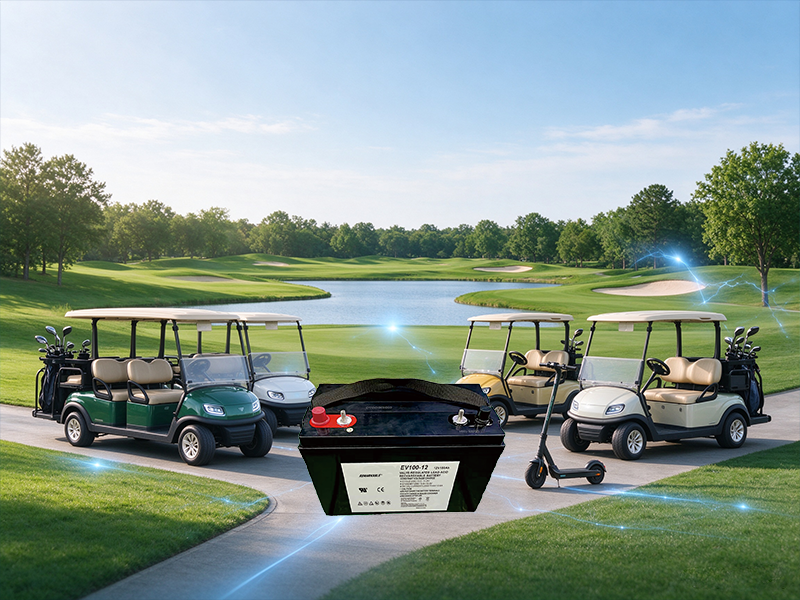
Environmental adaptability is another easy-to-overlook point. Garden equipment stays exposed to sunlight, rain, cold winter mornings and dusty yards. A high-quality motive battery features sealed construction and wide working temperature range. Poor-quality batteries will lose capacity rapidly in hot summer or struggle to start the machine on cold days. Vibration resistance is equally critical; loose internal cells caused by bumpy terrain will shorten service life sharply and create hidden safety risks.
If you plan to expand your product line to shared utility vehicles or electric carts for landscaping yards, you may also refer to the standards of Motive Power Electric Vehicle Battery. These products adopt stricter cell matching and BMS algorithms to maintain stable performance under frequent start-stop and variable load cycles, and the same quality logic can be referenced for heavy garden machinery. However, do not simply copy EV battery specifications directly, as garden machines usually have unique size limits, installation space and charging requirements.
Finally, verify supplier qualification, test reports and warranty terms. Data sheet parameters are not equal to real field performance. It is wise to run sample tests on your actual machines to check runtime, voltage consistency and heat generation. A trustworthy supplier provides stable batch consistency and after-sales technical support, which greatly reduces your long-term maintenance cost.
To sum up, the best motive battery for garden machinery balances power output, environmental durability, cycle life and total ownership cost. Do not be misled by low-price products with inflated capacity marks. Match the battery grade to your usage intensity, confirm robust protection and build quality, and your garden machines will keep reliable performance season after season.