
In the realm of lead-acid batteries, one factor stands out as a decisive determinant of their type, performance, and application scope: the thickness of the lead plates within their core structure. This seemingly subtle design parameter not only differentiates various battery categories but also directly dictates how they deliver power, withstand repeated use, and adapt to specific operational demands. From the rapid bursts of energy needed to ignite a car engine to the sustained power supply required for marine voyages, lead plate thickness serves as the foundational blueprint that shapes a battery’s identity. Among the most prominent battery types defined by this characteristic are the car start-stop battery, Deep Cycle Batteries, and a range of advanced variants like the AGM battery for car, 12V AGM car batteries, and AGM Start Stop Battery.
The car Start-stop battery, a staple in modern vehicles equipped with start-stop technology, offers a classic illustration of how thin lead plates optimize a battery for specific tasks. Unlike traditional car batteries, which may have moderately thick plates, start-stop batteries are engineered with a high density of thin, lightweight lead plates. This design is purpose-built to deliver instantaneous, high-current bursts—often exceeding several hundred amps in a matter of seconds—required to restart the engine quickly and reliably every time the vehicle comes to a halt, such as at traffic lights or in congested areas. The thin plates maximize the surface area in contact with the electrolyte, facilitating rapid chemical reactions that generate the necessary power for ignition. Moreover, these batteries are designed to endure frequent charge-discharge cycles associated with start-stop systems, though their focus remains on short, high-power pulses rather than prolonged energy delivery. In recent years, the AGM Start Stop Battery has emerged as a premium alternative in this category. AGM (Absorbent Glass Mat) technology encases the electrolyte in a fiberglass mat, preventing leakage and enabling a more compact design. When combined with the thin-plate structure of start-stop batteries, AGM variants offer enhanced durability, faster recharge rates, and superior performance in extreme temperatures—making them ideal for luxury vehicles and those operating in harsh climatic conditions.
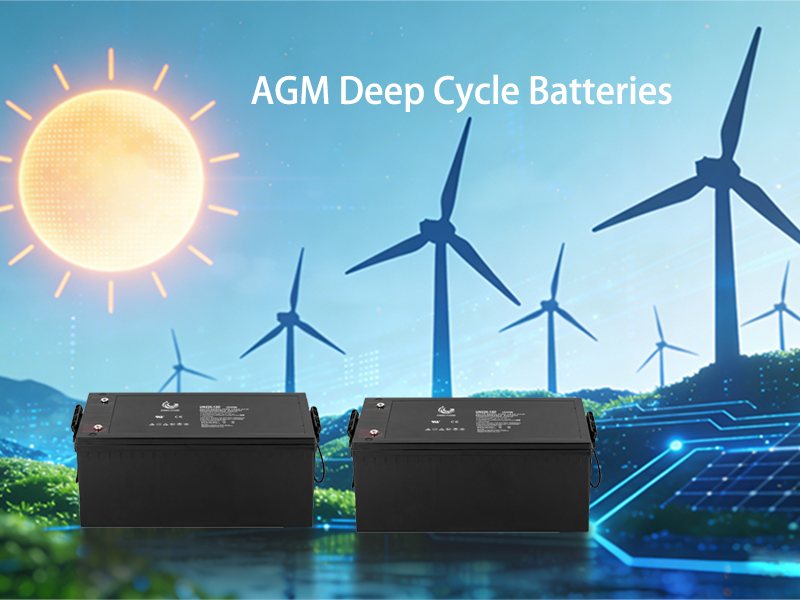
At the opposite end of the spectrum lie Deep Cycle Batteries, whose defining feature is the use of thick, robust lead plates. Unlike start-stop batteries, which prioritize power density, deep cycle batteries are engineered for endurance. Their thick plates are designed to withstand repeated, deep discharge cycles—often down to 20-50% of their capacity—without sustaining permanent damage to the plate structure. This resilience stems from the increased material volume of the plates, which slows down the corrosion process caused by prolonged chemical reactions. Deep Cycle Batteries excel at delivering a steady, low-current flow over extended periods, making them indispensable in applications where a continuous power supply is critical. Examples include renewable energy systems (solar and wind), recreational vehicles (RVs), golf carts, and off-grid power setups. In these scenarios, the battery must reliably power lights, appliances, and electronics for hours or even days between charges, a task that would quickly degrade a thin-plate start-stop battery.
A fascinating hybrid application of these two plate designs can be found in marine 12V batteries, which are engineered to balance the conflicting demands of starting power and deep cycling capability. Marine engines, like car engines, require a sudden surge of power to ignite, but boats also rely on their batteries to power navigation systems, fish finders, lights, and other electronics during extended trips on the water. To address this dual need, marine 12V batteries integrate a combination of thin plates (similar to those in car start-stop battery) and thick plates (characteristic of Deep Cycle Batteries). The thin plates deliver the high cranking amps needed to start the marine engine, while the thick plates ensure the battery can sustain a steady power output for hours of onboard use. This hybrid design is particularly relevant when paired with AGM technology, as seen in specialized marine AGM Batteries—a counterpart to the 12V AGM car batteries used in automotive applications. The AGM structure enhances the marine battery’s resistance to vibration (a common issue on boats) and eliminates the risk of electrolyte spillage, even when the battery is tilted or jostled, making it a safe and reliable choice for marine environments.
The rise of AGM technology has further blurred traditional lines between battery types while elevating their performance, and this is nowhere more evident than in 12V AGM car batteries and AGM Start Stop Battery models. Unlike conventional flooded lead-acid batteries, AGM batteries are maintenance-free, as the glass mat retains the electrolyte and eliminates the need for topping up with water. For 12V AGM car batteries used in non-start-stop vehicles, this translates to longer service life, better resistance to vibration, and improved performance in both hot and cold weather. For AGM Start Stop Battery units, the combination of AGM technology and thin-plate design creates a battery that can handle the rigorous duty cycle of start-stop systems with greater reliability. These batteries can endure thousands of start-stop cycles without losing capacity, and their sealed construction makes them suitable for installation in tight engine bays or even passenger compartments—something that would be risky with flooded batteries due to the potential for acid leakage.
It is important to note that while plate thickness is a primary differentiator, it works in tandem with other design elements—such as electrolyte type, plate material composition, and battery casing—to define a battery’s overall performance. For instance, some Deep Cycle Batteries use lead-calcium alloys in their plates to reduce self-discharge, while others may incorporate grid designs that further enhance durability. Similarly, AGM Start Stop Battery models often feature advanced plate pasting techniques to improve the adhesion of active materials, reducing plate shedding and extending cycle life.
In conclusion, the thickness of lead plates is more than just a manufacturing detail; it is the cornerstone of lead-acid battery classification. From the thin plates of car start-stop battery and AGM Start Stop Battery that deliver instant ignition power, to the thick plates of Deep Cycle Batteries that ensure long-lasting energy supply, this parameter directly aligns battery design with real-world needs. As technology advances, innovations like AGM have enhanced the capabilities of these battery types, creating products like 12V AGM car batteries that offer superior performance and reliability. Understanding the relationship between plate thickness and battery type is not only essential for manufacturers but also for consumers, who can make more informed decisions when selecting a battery that matches their specific application—whether it’s powering a car through city traffic, a boat across a lake, or a home off the grid.