
In an era where fuel efficiency and environmental responsibility are paramount, start-stop technology has become a standard feature in nearly 75% of new vehicles sold globally in 2026. While this technology delivers tangible benefits—reducing fuel consumption by 5-12% in urban driving and cutting emissions—it places unprecedented stress on your vehicle’s battery. For discerning drivers and automotive professionals alike, understanding why AGM Start Stop Battery is the only reliable choice for start-stop systems is critical to avoiding costly breakdowns and maximizing your vehicle’s lifespan.
First, let’s clarify the fundamentals: AGM stands for Absorbent Glass Mat, a advanced battery technology that has revolutionized how modern vehicles handle power demands. Unlike traditional flooded lead-acid batteries, which use free-flowing liquid electrolyte, AGM Batteries trap the electrolyte in a mat of glass fibers, creating a sealed, maintenance-free design. This core difference is what makes AGM Start-stop batteries uniquely suited to the rigors of start-stop systems—and why they outperform all other battery types in this application.
The demands of start-stop technology are non-negotiable: a battery must endure 30,000 to 50,000 engine starts per year in urban settings, compared to just 500-750 starts for traditional vehicles. It must also operate reliably in a partial state of charge (PSoC)—typically 60-80%—for extended periods, while powering high-demand onboard electronics like ADAS, infotainment systems, and climate control even when the engine is off. This is where AGM battery for car systems shines: its design eliminates acid stratification, a common issue in flooded batteries that causes premature failure in PSoC operation, and delivers exceptional cycle life (1,200-1,500 cycles) compared to just 300-500 cycles for conventional batteries.
For most passenger vehicles, 12V AGM car batteries are the industry standard, and for good reason. A 12V AGM Battery balances power output and efficiency perfectly, providing the 200-300A of cranking current needed for quick engine restarts while accepting rapid recharging from the vehicle’s alternator—critical for handling 10-20 start-stop cycles per hour in heavy traffic. Unlike flooded batteries, which take 12-18 seconds to recover voltage after a start, 12V AGM car batteries rebound to 12.4V in just 4-6 seconds, ensuring consistent performance even in the most demanding driving conditions. Additionally, their sealed design makes them resistant to vibration, leakage, and extreme temperatures—they maintain 65% of their cold cranking amps (CCA) at -18°C, compared to just 40% for flooded batteries.
One of the most common misconceptions among vehicle owners is that “turning off start-stop prolongs battery life.” This couldn’t be further from the truth. Laboratory tests show that vehicles with AGM Start Stop Battery systems actually experience longer battery life when start-stop is enabled: a test of two identical vehicles found that the one with start-stop active had only a 5% capacity drop after 1,000 cycles, while the vehicle with start-stop disabled lost 8% capacity after just one hour of idling. Disabling start-stop forces the battery to power onboard electronics during prolonged idling, increasing by up to 30% due to inefficient alternator output during idle periods.
When selecting an AGM Battery for car, there are three non-negotiable parameters to prioritize: rated capacity (Ah), cold cranking amps (CCA), and voltage. For passenger vehicles, 12V AGM car batteries are mandatory—mismatched voltage will damage your vehicle’s ECU and electrical systems. Rated capacity (typically 60-80Ah for most cars) determines how long the battery can power electronics when the engine is off, while CCA (the maximum current delivered at -18°C) ensures reliable cold-weather starts. Always match or exceed the OEM specifications: using a lower-capacity or lower-CCA AGM battery will lead to premature failure and potentially damage your start-stop system.
Maintenance is another area where AGM Start-stop batteries differ from traditional options. While they are maintenance-free (no need to top up electrolyte), they do require proper care to maximize lifespan. Avoid deep discharging (keeping the battery below 30% charge), as this can permanently reduce capacity. If you drive short distances frequently (less than 10 minutes per trip), consider using a smart trickle charger to keep the battery fully charged—this prevents sulfation, a leading cause of AGM battery failure. Additionally, never use a conventional charger on an AGM battery: AGM batteries require a regulated charger that maintains a voltage between 12.8-14.7V to avoid overcharging and thermal damage.
For luxury vehicles, hybrid models, or vehicles with regenerative braking systems, AGM Start Stop Battery is not just a recommendation—it’s a requirement. Regenerative braking systems rely on the battery to capture and store energy during deceleration, placing even greater stress on the battery. AGM technology’s high charge acceptance rate (0.4-0.6C) and low internal resistance make it the only battery type capable of handling this additional load without degradation. In fact, 70% of European car brands use AGM batteries as OEM equipment, a testament to their reliability in high-demand applications.
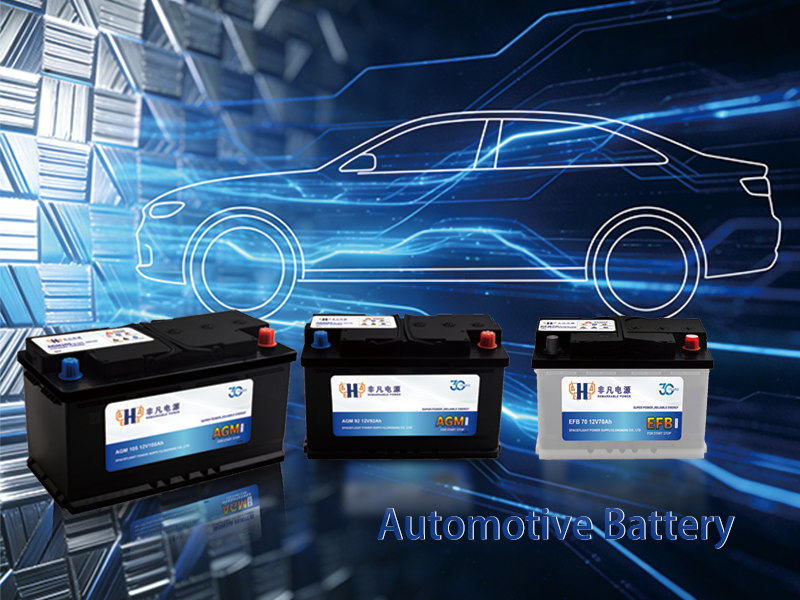
In comparison to EFB (Enhanced Flooded Battery) alternatives, AGM Start-stop batteries offer superior performance and longevity. EFB batteries are a budget option for basic start-stop systems but lack the PSoC tolerance and cycle life of AGM batteries—they typically last 2-3 years, compared to 4-8 years for AGM batteries. For vehicle owners planning to keep their car for more than 3 years, AGM is the more cost-effective choice, as it eliminates the need for frequent battery replacements.
To sum it up: AGM Start Stop Battery is the backbone of modern start-stop technology. Its sealed design, exceptional cycle life, rapid charge acceptance, and resistance to extreme conditions make it the only reliable choice for vehicles equipped with start-stop systems. Whether you’re driving a compact city car or a luxury hybrid, choosing 12V AGM car batteries ensures that your vehicle’s electrical system operates seamlessly, your start-stop function performs as intended, and your battery delivers consistent, long-lasting performance.
As an Automotive Battery expert, my final advice is simple: never cut corners with your vehicle’s battery. If your car has a start-stop system, always choose an AGM Start-stop battery that matches your OEM specifications. With proper selection and care, your AGM battery will provide years of trouble-free service, keeping you on the road and your vehicle running efficiently.