
Solar GEL Deep Cycle Battery, also referred to as the kind ‘gel’ lead–acid battery, is an invented type of lead–acid battery created solely for solar power storage utilization. While in contrast to the conventional flooded lead–acid batteries, gel batteries use a gelled electrolyte—normally silica gels—which immobilizes the electrolyte so it cannot spill. This unique feature not only enhances safety but also makes it suitable for a wider range of installation environments, including those where spillage could pose a significant risk.
The solar gel battery works with deeper discharge levels without sustaining damage. It is designed to be discharged more fully than lead-acid batteries and will allow for greater usable capacity plus overall efficiency in Solar energy storage systems.

Unlike flooded lead-acid batteries that don’t need much maintenance, solar gel battery doesn’t have to be often topped up with water. The immobilisation of the lead-gel electrolyte inside the batteries ensures there is virtually no risk of leakage and makes using them convenient, especially in remote places or those hard to reach.
One of the key advantages of solar gel batteries is their improved resistance to vibrations and shocks. This enhanced durability makes them a more reliable option in various applications, such as in off-grid solar power systems where they might be subjected to rough handling during transportation or installation in remote areas. The gel electrolyte also contributes to a more stable internal chemistry, reducing the likelihood of internal short circuits and extending the battery’s overall lifespan.
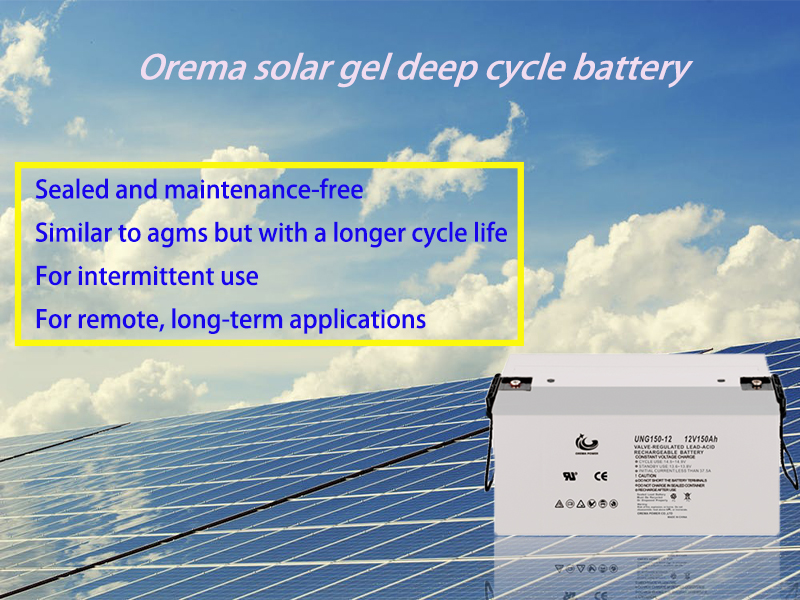
In terms of performance, Solar GEL Deep Cycle batteries typically offer a relatively high energy density compared to some other types of batteries in the same class. This means they can store more energy in a given volume, making them space-efficient for solar power installations where space might be at a premium. Additionally, they have a relatively low self-discharge rate, allowing them to retain their charge for longer periods when not in use. This is particularly beneficial in solar energy setups where the battery may not be continuously charged or discharged, such as during periods of low sunlight or when the energy demand is sporadic.
Another aspect that sets solar gel batteries apart is their ability to operate effectively in a wide range of temperatures. They can withstand both high and low temperatures better than many traditional batteries, which is crucial for solar applications in diverse climatic conditions. In hot climates, they are less likely to experience thermal runaway, a phenomenon that can severely damage batteries and reduce their performance and lifespan. In cold climates, they can still deliver a reasonable amount of power, although their performance may be somewhat reduced compared to optimal temperatures.
However, it’s important to note that solar gel batteries also have some limitations. They are generally more expensive to manufacture than flooded lead–acid batteries, which can translate to a higher upfront cost for consumers. Additionally, their charging requirements are more specific and may require a more sophisticated charging controller to ensure optimal performance and prevent overcharging or undercharging, which could damage the battery.
Despite these drawbacks, the benefits of solar gel batteries make them an attractive option for many solar power applications. As the demand for clean and reliable solar energy continues to grow, the development and improvement of solar gel batteries are likely to continue, further enhancing their performance and cost-effectiveness. Whether it’s for powering a small residential solar system or a large-scale off-grid installation, solar gel batteries are poised to play an increasingly important role in the future of solar energy storage.